
Mecklenburg County Arrest Records and Court Charges
Mecklenburg County arrest records begin on the law-enforcement and jail side. The Mecklenburg County Sheriff's Office Arrest Inquiry and Inmate Inquiry can show arrest and custody details such as name, mugshot, PID, arrest number, arrest date, date of birth, race, ethnicity, sex, height, weight, and jail identifiers. That information is not the same thing as the final criminal court record. It tells a reader that an arrest or custody event exists and may list charge descriptions, bond terms, and process codes tied to the booking.
Court charge records start when a criminal matter enters the North Carolina General Court of Justice. For Mecklenburg County, the Clerk of Superior Court keeps criminal actions, files, dockets, indexes, judgments, liens, and other trial-court records under N.C.G.S. 7A-109. Portal is the first online route for filed case information. The Mecklenburg County Courthouse remains the local paper-file and public-terminal fallback during public hours.
Arrest Record vs. Court Charge Record
- Arrest record
- Created by law enforcement or detention staff. It may show booking, arrest number, PID, custody status, charge text, bond, and process type.
- Court charge record
- Created in the court case after filing. It shows the charge as tracked by the clerk, court events, dispositions, hearings, and financial information when public.
- Best use
- Use arrest data to confirm the booking event. Use the court case to review formal charges, amendments, dismissals, pleas, and judgment.
The MCSO Resident Inquiry warning is important: charges should not be confused with convictions. Many people are charged without being convicted, and the charge may later be reduced, dismissed, expunged, or resolved by plea. Full case events and sentencing belong in the Mecklenburg County criminal court records file, while active custody and jail roster details belong in the inmate record.
Search Mecklenburg County Arrest Records
For the arrest side, start with the MCSO Arrest Inquiry. It accepts name, arrest date, PID, and arrest number fields. For the custody side, MCSO Inmate Inquiry can show active and recent residents. For the court charge side, use the NC Judicial Branch Portal, choose Smart Search, and filter by Mecklenburg County when a county-specific case search is needed.
- Search MCSO Arrest Inquiry for the arrest number, arrest date, PID, and basic charge text when the arrest is recent enough to appear.
- Use MCSO Inmate Inquiry when the person may still be in county custody or when jail identifiers such as JID and prisoner type matter.
- Open Portal Smart Search and search by defendant name or case number, using Mecklenburg County under advanced location filters.
- Review the case summary, events, hearings, dispositions, and financial information to see whether the filed charge changed after arrest.
Mecklenburg's eCourts transition matters for older documents. The Judicial Branch courthouse page says electronic access moved to Portal on October 9, 2023. If a pre-transition criminal document cannot be found online, the clerk directs criminal-file requests to meckcriminalrecords@nccourts.org with the record type, party names, and file number if known.
The MCSO Inmate FAQ and court-record source give different views of the same matter. The jail record may use process codes and bond codes. The court case may use charge descriptions, case events, hearings, and dispositions. A careful charge lookup checks both channels, then treats the court disposition as the controlling result once the case has moved through court.
Mecklenburg County Charge Codes
The MCSO Inmate FAQ is the best local source for booking-side charge terms. It defines CASE as the trial court case number, docket, and number. DESCRIPTION is the text description of the charge. PROCESS TYPE identifies the process causing custody. CHARGE TYPE marks the charge as misdemeanor, felony, traffic, or infraction. BOND and BOND TYPE show the release amount and release category, when one is set.
The MCSO Inmate Inquiry FAQ publishes the local code glossary used to read Mecklenburg County arrest records and charge entries.
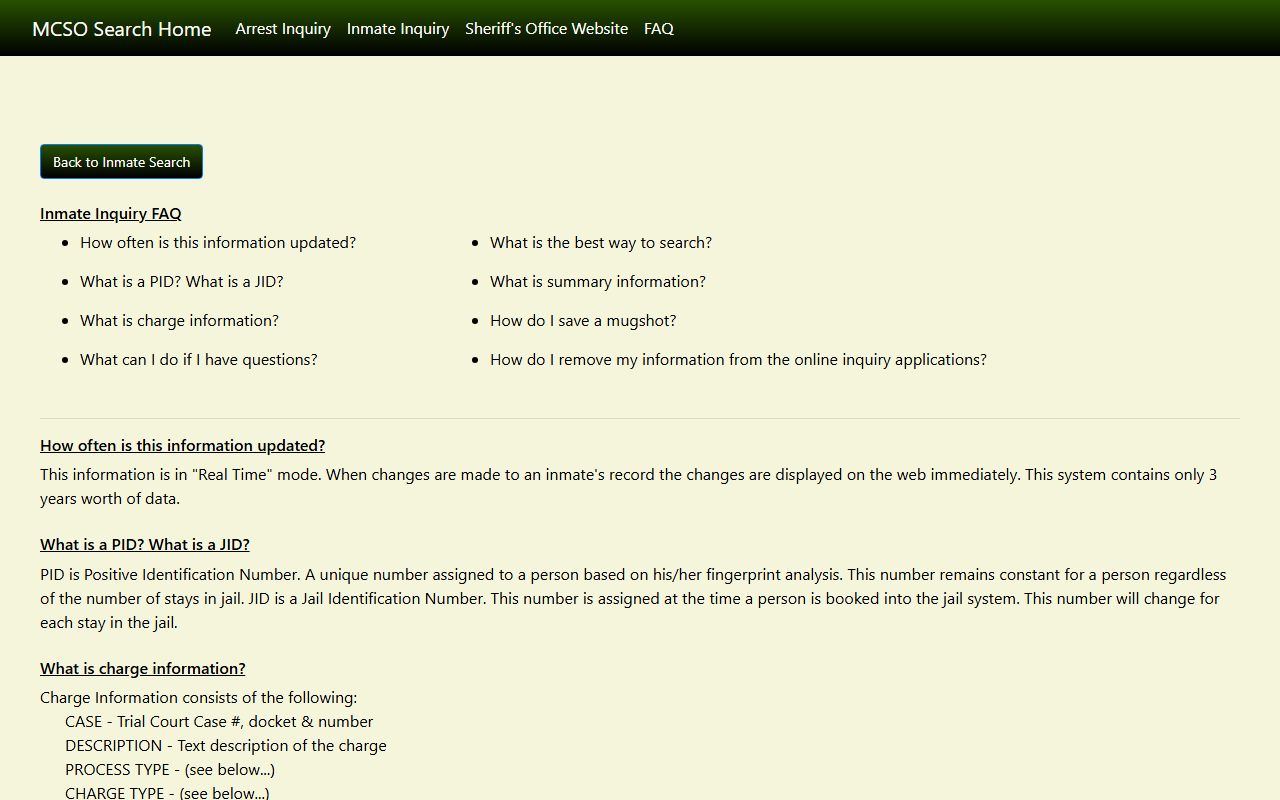
Those code definitions help connect the booking entry to the later court case, especially when a short process code appears before a full Portal charge description is available.
- REL: magistrate's order, charges, and conditions of release.
- FTA: failed to appear, often tied to a missed court date.
- FTC: failed to comply with a court order or condition.
- GJI: grand jury indictment, a felony charging route.
- PV: probation violation, which may affect bond and custody.
- FED, ICE, OOC, STATE, WRIT: hold or detainer terms showing another authority or jurisdiction may be involved.
Charge type is short but important. M means misdemeanor, F means felony, T means traffic, and I means infraction. Bond types also matter: SEC means secured, UNS means unsecured, CASH means cash only, CUST means custody of another, and NONE means no bond allowed. These terms do not replace the case file, but they explain why a jail profile may look different from a court docket.
Charging Documents After Arrest
Charges after arrest may begin with law enforcement, a magistrate process, or a prosecutor's later decision. In Mecklenburg County, prosecution decisions for state criminal cases are handled by the District Attorney for the 26th Prosecutorial District. The official contact listing identifies District Attorney Spencer B. Merriweather III at 700 East Trade Street, Charlotte, NC 28202, phone 704-686-0700. The district attorney prosecutes felony, misdemeanor, traffic-criminal, and juvenile delinquency matters for the State.
| Document | Who Uses It | What It Means for the Charge |
|---|---|---|
| Complaint or magistrate process | Law enforcement, magistrate, or prosecutor path | Starts or supports the initial accusation and release conditions, often visible first on arrest or jail records. |
| Information | Prosecutor-filed charge document where used | States the charge the State elects to pursue without relying on a grand-jury indictment for that filing step. |
| Indictment | Grand jury and prosecutor | Formal felony charging document. The MCSO glossary uses GJI for grand jury indictment as a process type. |
The North Carolina trial-court structure also affects which court path appears. Superior Court handles felony criminal cases, while District Court handles misdemeanors, infractions, traffic matters, and many first appearances. One arrest can produce several charges, and those charges may split by severity, case number, or later procedural step.
Mecklenburg County Charge Status
Charge status changes as the case moves. A jail result may show active or bonded status, while Portal may later show hearings, events, dispositions, and financial information. The arrest record is a point-in-time entry. The court record is a live case history while the matter is pending and an outcome record after disposition.
| Status or Term | What It Means | Where It May Appear |
|---|---|---|
| Active | The arrest or custody entry is still active in the sheriff inquiry system. | MCSO disposition code A or active inmate filters. |
| Bonded | Release occurred under a bond type or bond amount set for the matter. | MCSO disposition code B, bond fields, or court financial entries. |
| Amended or reduced | The filed charge changed after review, plea talks, indictment, or court order. | Portal case events, charge list, or disposition entries. |
| Dismissed or voluntary dismissal | The State or court ended the charge without a conviction on that count. | Portal dispositions, court file, or MCSO VDGJ-related code where applicable. |
| Expired or inactive | The sheriff inquiry entry no longer functions as an active custody or arrest status. | MCSO disposition codes E and I. |
For filed court records, the strongest public-access rule is the clerk record statute. The court record keeping statute is the direct authority for public inspection of clerk-held criminal actions unless another law restricts access.
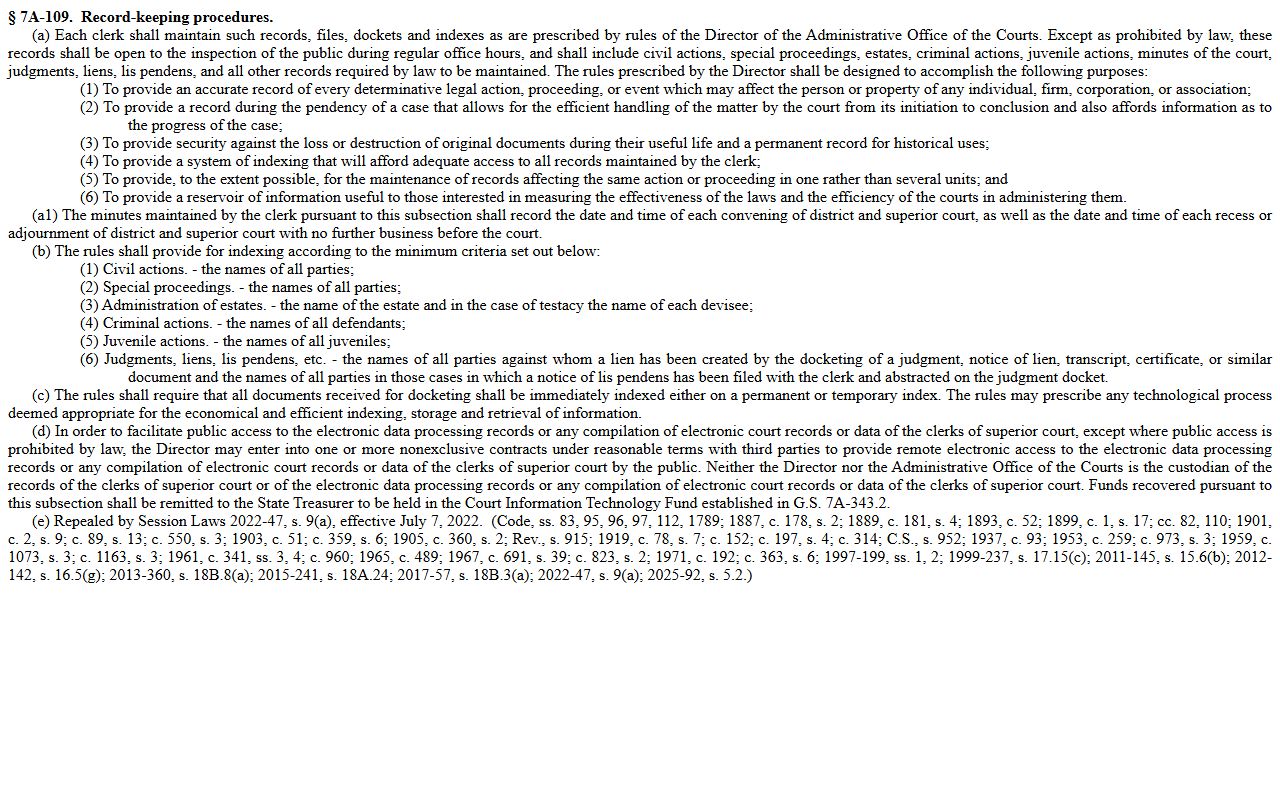
That statute is why a filed case can be public even though some law-enforcement details, juvenile records, sealed matters, or unserved warrant data may remain unavailable.
Note: Portal can lag or omit restricted items, so official copies and complete paper-file checks should go through the Mecklenburg Clerk of Superior Court.
Charges vs. Convictions
A charge is an accusation. A conviction is an outcome after a guilty plea, verdict, or other judgment that legally establishes guilt. Mecklenburg County arrest records and sheriff inquiry entries can show charge text before the court has decided anything. That is why MCSO warns readers not to confuse criminal charges with convictions.
| Point of Comparison | Charge | Conviction |
|---|---|---|
| Legal meaning | An allegation filed or tracked after arrest. | A court result based on plea, verdict, or judgment. |
| Record source | MCSO arrest data, inmate data, Portal case charge list, and clerk file. | Portal disposition, judgment, sentencing sheet, and clerk-certified copy. |
| Can it change? | Yes. It may be amended, reduced, dismissed, or replaced by indictment. | Yes, but only through appeal, post-conviction relief, expunction, or other legal action. |
| Background-check risk | Should be read as an accusation unless the record also shows a conviction. | May affect sentencing, licensing, employment screening, or custody status depending on law. |
North Carolina background checks have their own rules. The Judicial Branch court-records help topic says people performing background checks should use the county clerk's office rather than relying only on Portal. Statewide sentenced-prison, probation, and parole information belongs to the Department of Adult Correction, while sex-offender registration belongs to the SBI registry.
Mecklenburg County Charge Requests
Access depends on the record holder. Court charge documents and dispositions are clerk records. Booking and arrest entries are sheriff records. County administrative records outside those systems may use the county public-record request channel. For Mecklenburg County agency records, the official public records request page links to the county request process.
The county request page is a fallback when the record is not a court case document, not a Register of Deeds record, and not available through a specialized MCSO inquiry tool.
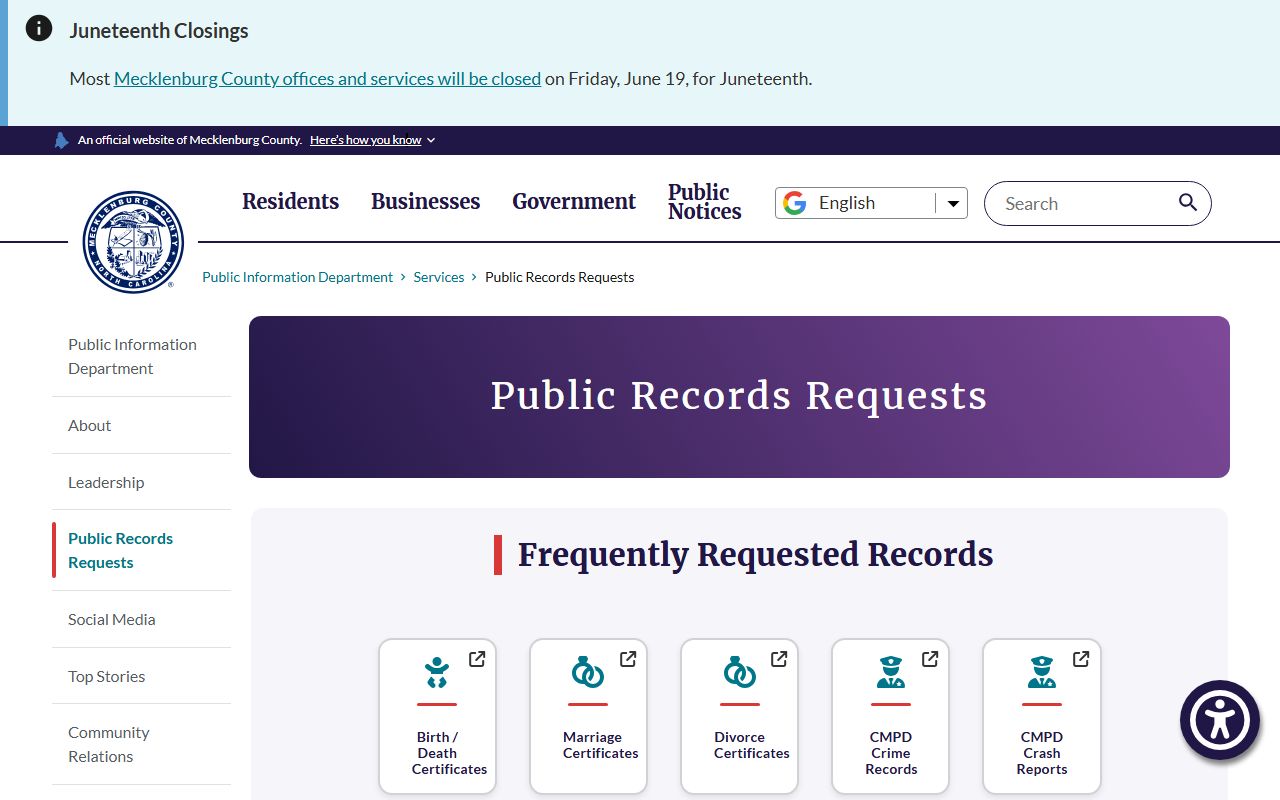
Use that county channel for county agency records, while court filings still route through the Clerk of Superior Court and sheriff inquiry questions route through MCSO.
The Mecklenburg public request portal supports the same practical point: use the request route only after checking the correct specialized source first.
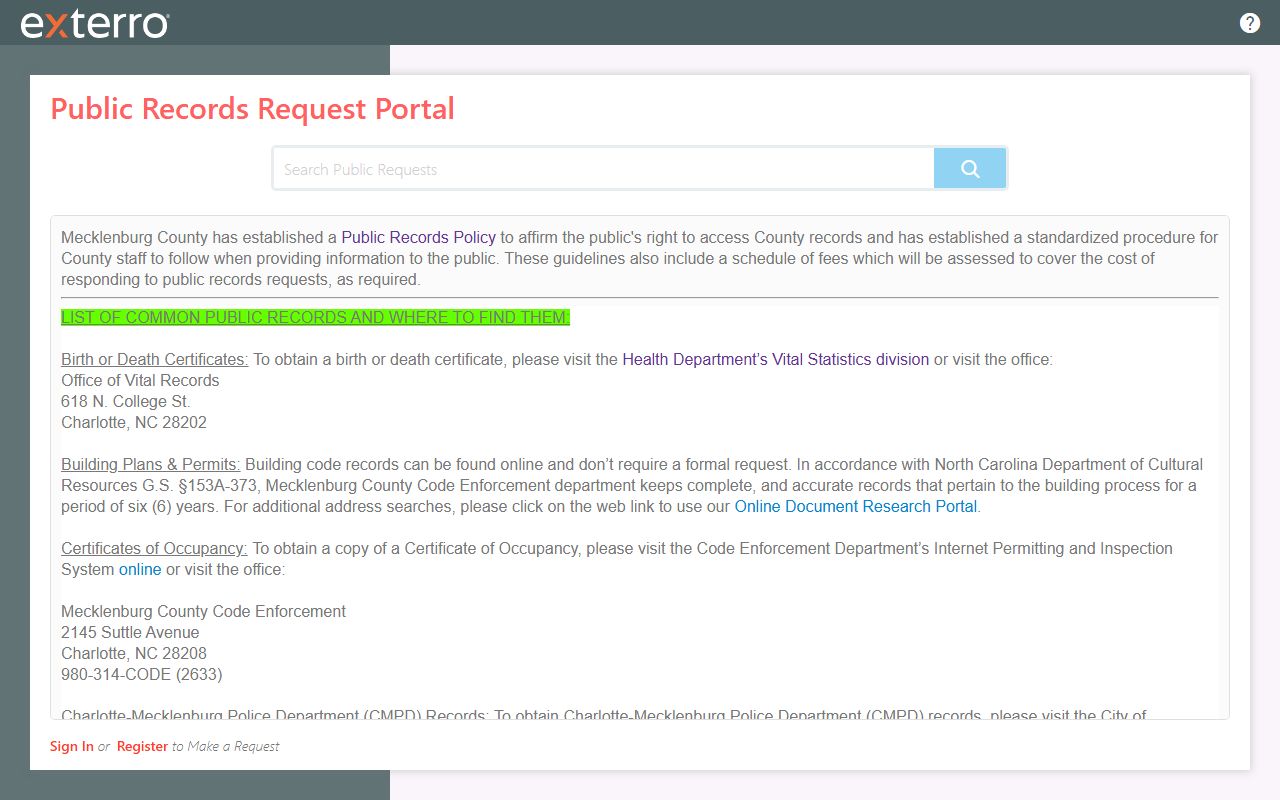
For a charge record, the specialized source is usually Portal or the courthouse clerk. For a booking-side detail, it is usually MCSO.
Restricted Mecklenburg County Charge Records
Some charge records are not ordinary public records. Juvenile delinquency and undisciplined court records are restricted under Chapter 7B Article 30. Adoption files and many mental-health proceedings are restricted. Public copies can redact Social Security numbers, financial account numbers, driver's license or state ID numbers, passport numbers, card numbers, passwords, and protected minor information.
Sealed and expunged records require care. MCSO says arrest and inmate inquiry information remains online for three years from arrest or release. Early removal from the sheriff inquiry system requires an Order of Expunction signed by a judge. Portal and clerk records may also hide expunged or sealed matters after the court and agencies process the order.
The North Carolina public records law index applies to many county agency and sheriff requests, while court-file inspection relies more directly on the clerk record statute.
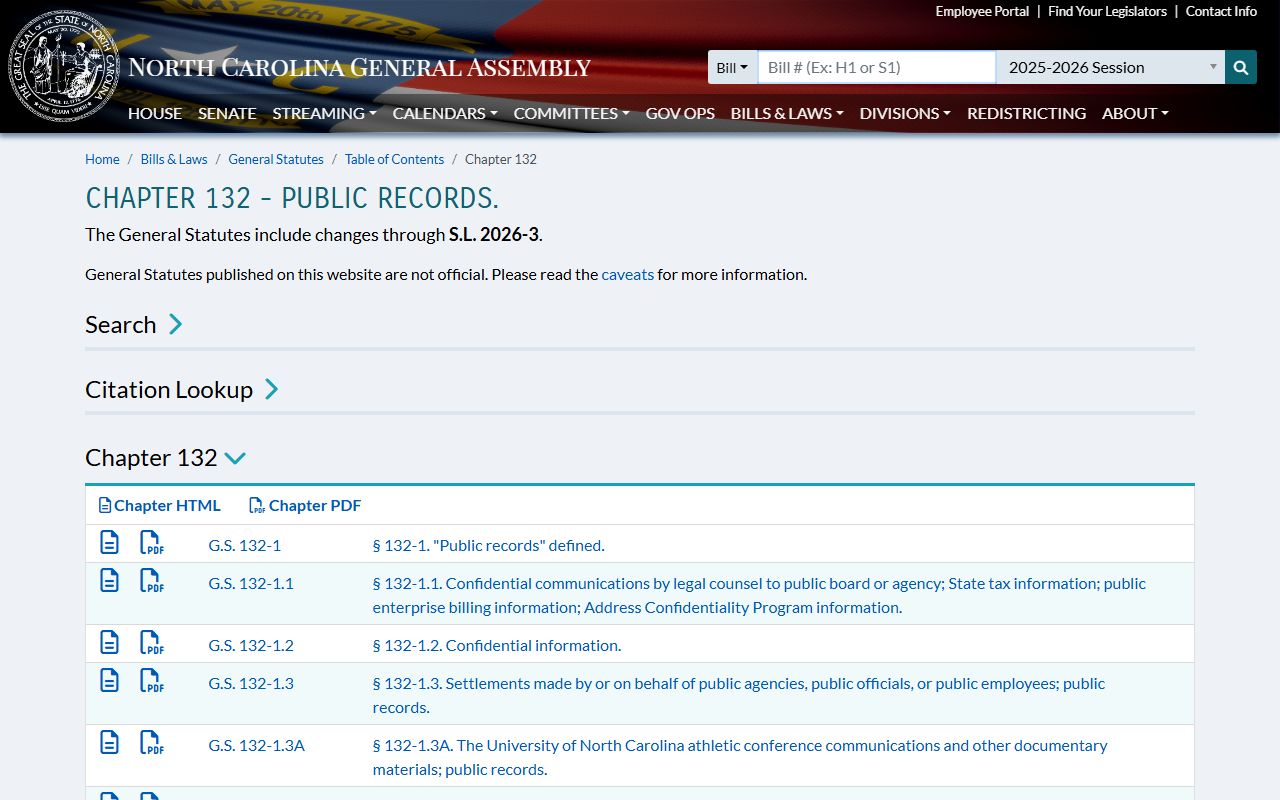
That distinction prevents a common error: a requester should not use the county agency request path when the record is actually a court case copy held by the Clerk of Superior Court.
DA Review of Mecklenburg Charges
Law enforcement and magistrate processes may initiate an arrest, but the District Attorney controls prosecution decisions for state criminal cases. The DA may proceed on the original charge, seek an indictment, reduce the charge, dismiss a count, or resolve the case by plea. The Mecklenburg Public Defender and appointed counsel channels serve eligible defendants who cannot afford private counsel.
District Attorney, 26th Prosecutorial District
700 East Trade Street
Charlotte, NC 28202
704-686-0700
For people reading a charge record from outside the case, the safest rule is plain: treat a charge as pending or historical accusation unless the court record shows a conviction. Court dates, plea entries, judgment sheets, and sentencing records provide the result. A booking entry alone does not.