
Mecklenburg County Court Records Search
The main online access point for Mecklenburg County court records is the NC Judicial Branch Portal. Mecklenburg moved into eCourts and Portal on October 9, 2023, so public case information, court dates, many documents, and eligible payments now start there. The Judicial Branch says anonymous users can search publicly available case information without registration. Registration is optional for frequent users who want saved cases, while elevated access is limited to users with verified statutory authority.
Use Smart Search when the goal is a case record, party search, record number search, or case-status lookup. The Portal training and resources page describes Smart Search results as a source for case information, assignment information, party information, case events, dispositions, hearings, financial information, and causes of action for civil, family, probate, and mental health matters when those fields are public.
The North Carolina court records help topic is the statewide starting point for understanding what is and is not available online.
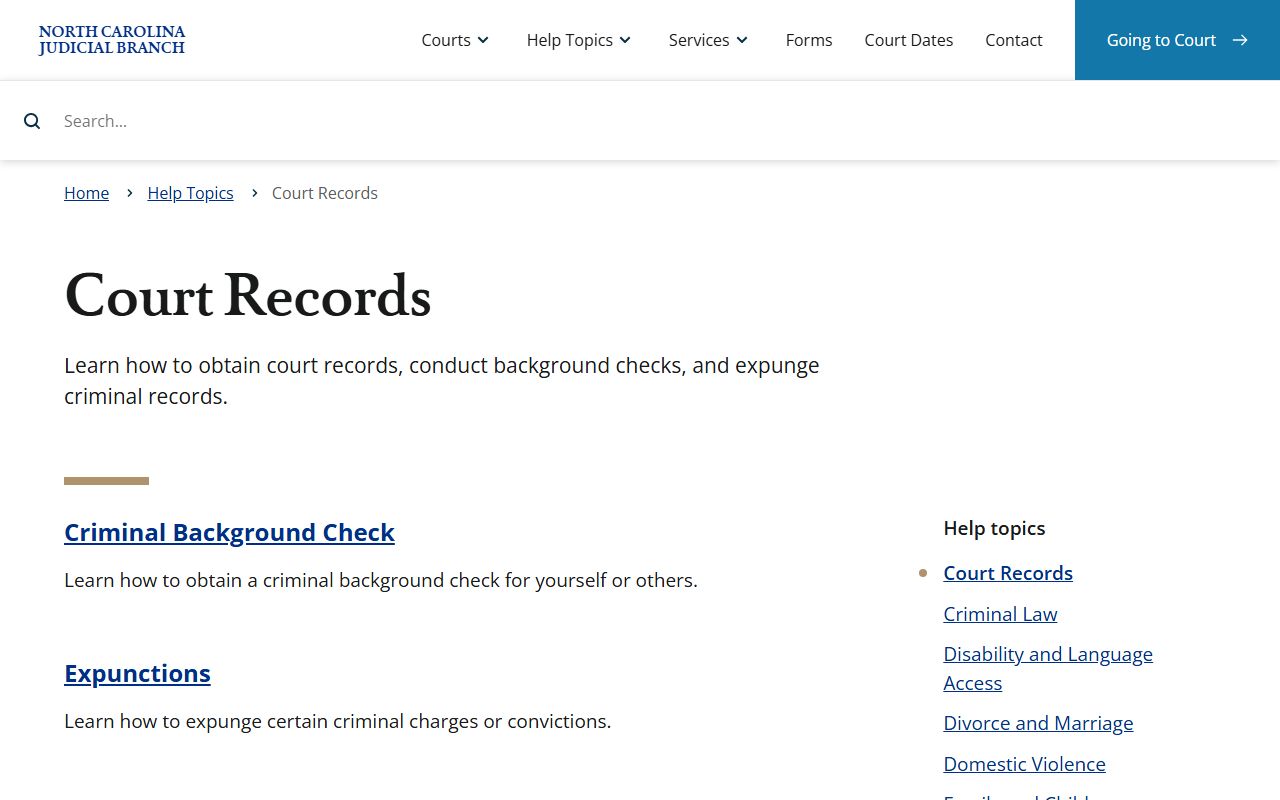
That statewide help topic matters locally because Mecklenburg County uses the same General Court of Justice record system as other North Carolina counties.
- Open Portal and choose Smart Search for court records and case information.
- Enter a record number or a name in Last, First Middle Suffix format.
- Expand Advanced Filtering Options and select Mecklenburg County under location.
- Add file-date, case-type, case-status, date-of-birth, or identifier filters when the name is common.
- Open the result summary and review the case summary, register of actions, hearings, dispositions, and financial information when available.
- Use Search Hearings instead of Smart Search when the immediate need is a court date or calendar entry.
Mecklenburg County Court Records Fields
Smart Search can be broad or narrow. A name-only search may return many matches, especially in a large county such as Mecklenburg. The better route is to combine a party name or case number with the Mecklenburg County location filter and, when known, case type or filing date. Portal wildcard rules also matter. A case-number wildcard needs at least four characters. A business or nickname wildcard needs at least four characters followed by an asterisk. A person-name wildcard needs at least three last-name characters plus an asterisk and one first-name character plus an asterisk.
| Field Label | Type | Required | Notes / Format |
|---|---|---|---|
| Record Number or Name | Text | Yes unless using advanced fields | Use case number or Last, First Middle Suffix name format. |
| Last Name | Text | Required for person search | Can be paired with first and middle name fields. |
| First Name | Text | Required with last name | Use a full first name or allowed wildcard pattern. |
| Name Suffix | Dropdown | No | Use only when needed to distinguish people with similar names. |
| Filter by Location | Multi-select | No | Choose Mecklenburg County to avoid statewide result noise. |
| Search by | Dropdown or radio group | No | Party Name, Nickname, Business Name, or Sounds Like. |
| Date of Birth From / To | Date | No | Useful for criminal and traffic name matches. |
| FBI, SO, or Booking Number | Text | No | Criminal identifier filters when known from a related arrest or booking record. |
| Case Type and Status | Dropdown | No | Narrows civil, criminal, family, probate, mental health, active, closed, or disposed matters. |
| File Date Start / End | Date | No | Best for separating old and new cases with similar names. |
Note: Portal requires browser JavaScript and cookies, and it may require CAPTCHA during a search session.
Mecklenburg County Court Record Types
Mecklenburg court records are kept within North Carolina's unified General Court of Justice. Superior Court and District Court both sit at the county courthouse, but they handle different case types. Superior Court handles felony criminal cases, larger civil cases, and appeals from District Court. District Court handles misdemeanors, infractions, traffic, small claims, many family matters, juvenile matters, domestic violence matters, and first appearances. The Clerk of Superior Court keeps the records for both divisions.
The Judicial Branch instructions for obtaining court records explain the main split between online information, courthouse terminals, paper files, and copies. Mecklenburg readers should also separate court files from county administrative records, sheriff arrest records, Register of Deeds records, and NCDMV driver records.
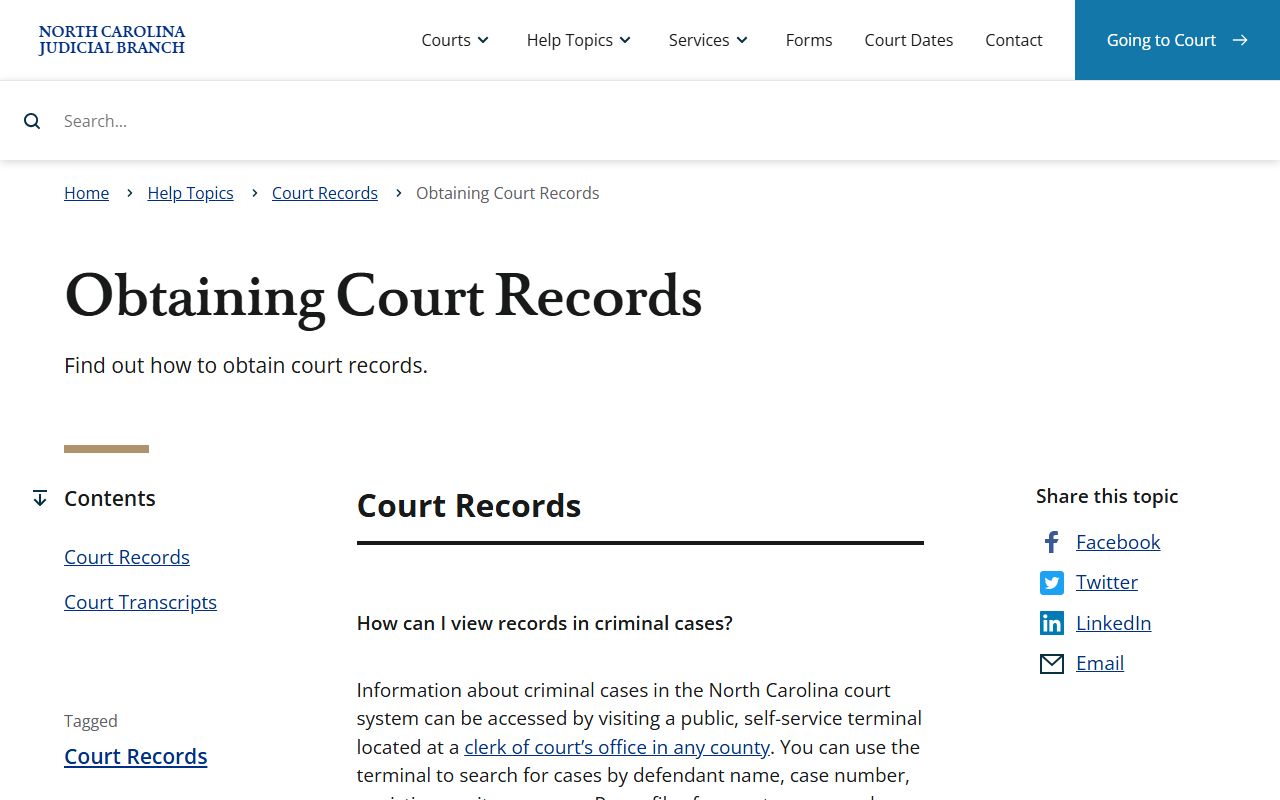
The official instructions help prevent a common mistake: a court file request belongs with the Clerk of Superior Court, while police reports, deeds, and marriage certificates use other agencies.
- Criminal records: felony files, misdemeanor files, charges, pleas, dismissals, judgments, sentencing sheets, bond orders, and hearing dates.
- Civil records: complaints, summonses, answers, motions, orders, judgments, liens, evictions, foreclosures, and post-judgment activity.
- Family records: divorce, custody, child support, domestic violence, and related case filings, with adoption and some juvenile material restricted.
- Estates and special proceedings: probate, wills, inventories, accountings, guardianship, incompetency, partitions, and foreclosure-related proceedings.
- Traffic and infractions: citations, waivers, court dates, dispositions, fines, failures to appear, and failures to pay.
- Judgments and liens: entries that may also appear in the NC Judgment Search index under the court record-keeping statute.
What Mecklenburg County Court Records Show
A court record is more than a search result. In Portal, a public Mecklenburg County court record may show the case summary, register of actions, case information, assignment information, party information, case events, dispositions, hearings, and financial information. Civil, family, probate, and mental health records may also show causes of action where the information is public. A certified copy or full paper file may include documents that are not visible in a public online view.
| Field | What It Shows |
|---|---|
| Case Number | The court's tracking number for the file, useful for exact searches and copy requests. |
| Case Type | The category, such as criminal, civil, family, estate, traffic, special proceeding, or judgment. |
| File Date | When the action was opened or filed with the court. |
| Parties | Names of defendants, plaintiffs, petitioners, respondents, attorneys, or interested parties when public. |
| Assignment | Judge, courtroom, division, or other assignment data when posted. |
| Events | Chronological docket activity, filings, hearings, orders, and status changes. |
| Hearings | Scheduled court dates, hearing types, courtroom details, or judicial officer information. |
| Disposition | The current or final result, such as judgment, dismissal, plea, conviction, or other outcome. |
| Financial Information | Costs, fines, fees, balances, or payment eligibility when the case type supports it. |
Older Mecklenburg County Court Records
The eCourts date is important. For Mecklenburg County documents filed before October 9, 2023, the courthouse page says to use Portal first. If a pre-transition document is not available there, the request should go to the correct clerk division by email and include the type of record request, party names, and file number if known. Criminal files go to meckcriminalrecords@nccourts.org. Civil files go to meckcivilrecords@nccourts.org. Estate special proceeding files go to meckestates@nccourts.org.
For case-specific help, the Judicial Branch points users to the Clerk of Court in the county where the case is assigned. Mecklenburg's Clerk of Superior Court is at the Mecklenburg County Courthouse, and public records are available onsite during public office hours. Public terminals and paper files remain useful when Portal does not show a document image, when a certified copy is needed, or when a complete file review is more reliable than an online summary.
The Portal training page also identifies Smart Search, Search Hearings, Make Payments, Judgment Search, registration, and elevated access as separate tools.
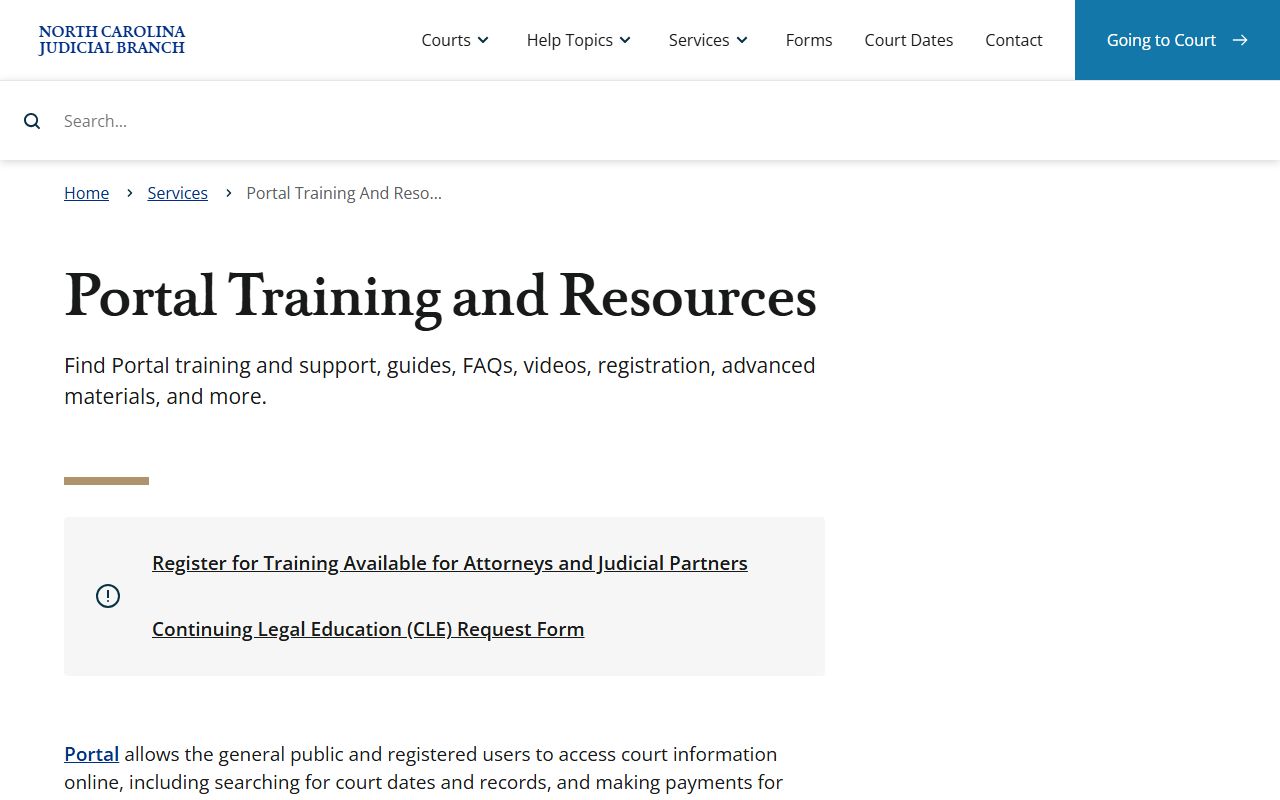
That separation is useful in Mecklenburg because a court record search, a hearing search, and a payment search may answer different parts of the same case question.
Public Access to Mecklenburg County Court Records
North Carolina court-record access rests mainly on N.C.G.S. 7A-109, which requires clerks to maintain records, files, dockets, and indexes and makes them open to public inspection during regular office hours unless another law says otherwise. The statute lists civil actions, criminal actions, estates, special proceedings, juvenile actions, judgments, liens, lis pendens, minutes, and related records. For county administrative records outside the court file, Chapter 132 of the North Carolina public records law is the better fit.
Public does not always mean instant or complete. Portal is a public access channel, but the clerk's office is still the place for background-check instructions, certified copies, paper files, older documents, and records that require staff review. The Judicial Branch public-record request page also separates administrative records from case documents and directs court document copies back to the county clerk where the case was filed.
Note: Court files may be public for inspection while certified copies, sealed material, and older documents require clerk review.
Restricted Mecklenburg County Court Records
Several Mecklenburg County court record categories are not ordinary public lookup records. Juvenile delinquency and undisciplined records are restricted under North Carolina juvenile records law. Adoption records are restricted. Mental health proceedings are generally confidential even though Search Hearings uses a "Probate or Mental Health" hearing type. Domestic violence and protective-order details can also be limited where safety, service, or confidentiality rules apply.
Expunged and sealed records require careful handling. The research notes that MCSO arrest and inmate inquiry data remains online for three years from arrest or release unless a judge signs an Order of Expunction. Court records may also hide sealed or expunged matters. A person seeking to clear a record should use the correct North Carolina expunction process for the charge or conviction, file in the county where the case was handled, and provide the signed order to agencies that require it for removal.
| Restricted Category | Mecklenburg Access Point | Practical Limit |
|---|---|---|
| Juvenile records | Juvenile Justice written request process | Not searched like ordinary public court records. |
| Adoption records | Court order or statutory authority | Not treated as open family case files. |
| Mental health records | Clerk or court review | Detailed contents are usually confidential. |
| Expunged records | Clerk order and agency processing | Hidden or removed from public court and sheriff inquiry systems. |
Mecklenburg County Court Records Requests
For in-person record work, go to the Clerk of Superior Court at the Mecklenburg County Courthouse. The office is open to the public Monday through Friday, 9:00 a.m. to 5:00 p.m. Bring the case number if known, the party names, the record type, and the filing date range. The courthouse has detailed security screening, and deputies cannot hold prohibited items, so avoid bringing knives, tools, vapes, glass containers, pepper spray, or recording equipment.
Mail and payment rules are important for eligible traffic and criminal payments, but copy charges should be confirmed with the clerk before mailing a request. The Mecklenburg payment page says mail payments go to the Clerk of Superior Court, Mecklenburg County Courthouse, PO Box 37971, Charlotte, NC 28237-7971, payable to Mecklenburg County Clerk of Superior Court. Cash and personal checks are not accepted by mail.
Mecklenburg Clerk of Superior Court
832 East Fourth Street
Charlotte, NC 28202
704-686-0400
Monday-Friday, 9:00 a.m.-5:00 p.m.