
Mecklenburg County Criminal Court Records
A Mecklenburg County criminal court record is the court case file kept by the Clerk of Superior Court after criminal charges are filed or brought into the trial-court system. It is different from the sheriff's arrest record. The court record tracks the legal case: charge filings, court dates, plea entries, motions, orders, verdicts, dismissals, judgments, sentencing terms, bond orders, probation conditions, and financial obligations. For a narrower discussion of the charging document and charge status after arrest, see Mecklenburg County arrest records and court charges.
Criminal jurisdiction is split between the two main trial divisions. Mecklenburg County District Court handles misdemeanors, infractions, traffic-criminal matters, first appearances, and many early proceedings. Mecklenburg County Superior Court handles felony criminal cases and related proceedings after indictment or transfer. Magistrates may handle initial criminal processes, warrants, release conditions, and first steps, but the court case record is maintained through the statewide court system and the clerk.
The MCSO Arrest Inquiry is a useful arrest-side source, but it is not the final criminal court file.
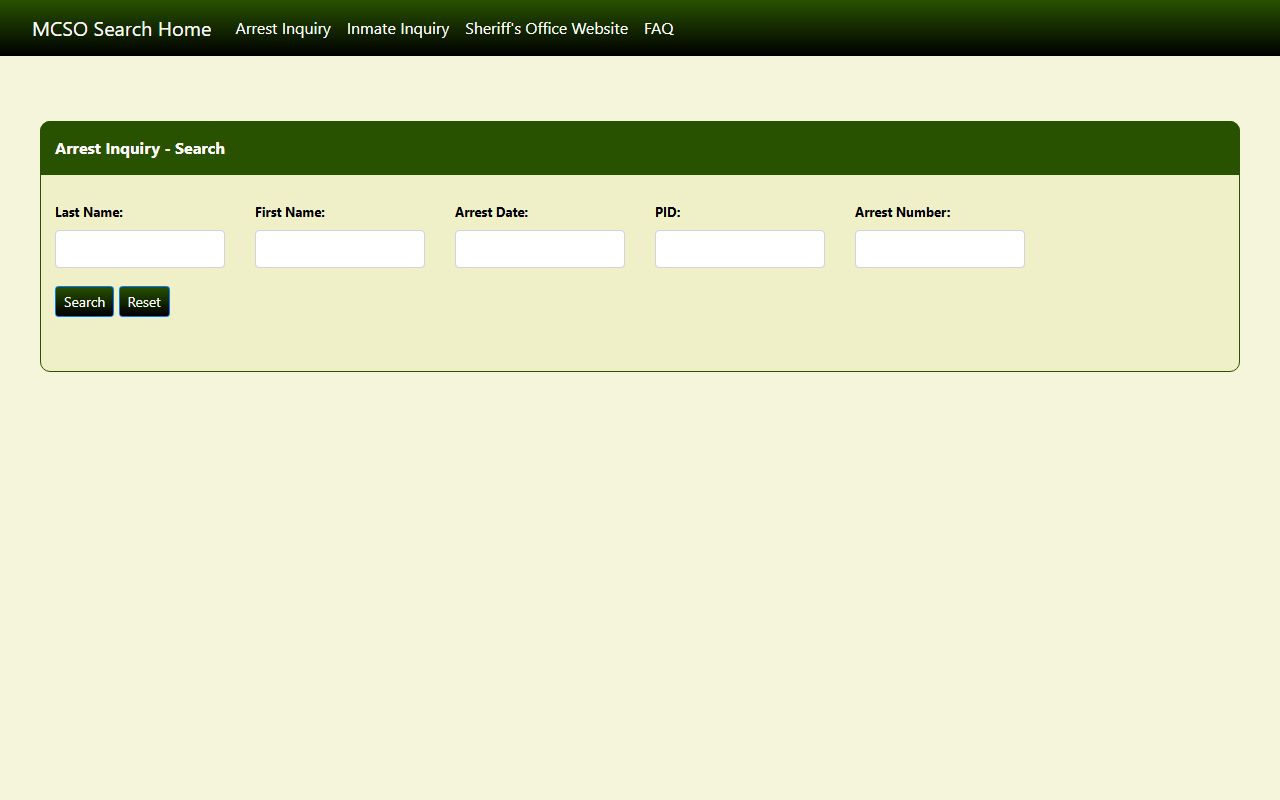
Use sheriff arrest data to identify arrest numbers, booking context, or initial charges, then use Portal or the clerk to read the court case.
Search Mecklenburg Criminal Court Records
The main case lookup channel is the NC Judicial Branch Portal. Mecklenburg County has used Portal for public case information, court dates, and copies of court documents since its eCourts transition on October 9, 2023. Smart Search can search by record number or name, and advanced filters can narrow the search by Mecklenburg County, case type, case status, filing date, date of birth, FBI number, SO number, or booking number when those identifiers are known.
- Open Portal and choose Smart Search for criminal case information.
- Search by defendant name in Last, First Middle Suffix format or by case number.
- Select Mecklenburg County under location and add case type, status, date-of-birth, file-date, or identifier filters.
- Open the case summary or register of actions and review charges, events, hearings, dispositions, and financial information.
- Use Search Hearings when the immediate question is a court date, courtroom, judicial officer, or hearing type.
- Contact the Clerk of Superior Court for certified copies, older documents, paper files, or case-specific help.
For criminal documents filed before October 9, 2023 that cannot be found in Portal, the Mecklenburg courthouse instructions point requesters to meckcriminalrecords@nccourts.org. The request should include the type of record, party names, and file number if known.
Mecklenburg Criminal Case Flow
A criminal case record grows as the case moves through the court system. The early record may show a magistrate order, warrant, citation, bond condition, or first appearance. Later entries may show indictment, arraignment, motions, continuances, plea negotiations, trial settings, verdict, judgment, sentencing, probation, or dismissal. Not every case reaches each stage.
Case flow: Charges Filed › Arraignment › Pretrial and Motions › Plea or Trial › Disposition › Sentencing
| Stage | What Happens | Where It Appears |
|---|---|---|
| Charges Filed | Law enforcement, magistrate process, prosecutor action, indictment, or citation starts the matter. | Charge entries, process codes, case opening, and first settings. |
| Arraignment | The defendant is advised of charges and a plea or next step is recorded. | Hearing events, plea entries, and case status updates. |
| Pretrial and Motions | Parties file motions, request continuances, address discovery, and set hearings. | Docket events, orders, and hearing calendar entries. |
| Plea or Trial | The case resolves by plea, dismissal, verdict, or trial outcome. | Disposition, judgment, or verdict fields. |
| Sentencing | The court imposes probation, active time, fines, costs, or other conditions after conviction. | Judgment, sentence, financial information, and probation entries. |
Mecklenburg Criminal Record Fields
Portal training identifies several public criminal case areas that may appear in a Mecklenburg County criminal court record. Sheriff inquiry pages also show arrest-side fields such as PID, arrest number, booking date, bond, charge type, process type, and disposition codes, but those fields should not be mistaken for the court's final disposition. The court record should be read from the case file outward, with arrest data used only as supporting context.
| Field | What It Shows |
|---|---|
| Case Number | The court number used for Portal search, clerk requests, and docket matching. |
| Defendant | The person accused in the criminal case, with party details when public. |
| Charges | The offenses as filed, amended, dismissed, reduced, or adjudicated in court. |
| Case Events | Filings, hearings, continuances, orders, motions, and other docket actions. |
| Plea | The defendant's answer, such as guilty, not guilty, or another legally recognized plea entry. |
| Disposition | The current or final result, including conviction, dismissal, acquittal, or other outcome. |
| Sentence | Active time, probation, costs, fines, conditions, or other punishment after conviction. |
| Financial Information | Court costs, fines, fees, balances, and payment eligibility when displayed. |
Charges vs Convictions
A charge is an accusation or filed offense. A conviction is a court outcome after a guilty plea, verdict, or other adjudication that results in guilt. Mecklenburg County criminal court records may show charges that were later dismissed, reduced, amended, or resolved without a conviction. The MCSO inquiry materials also warn users not to confuse charges with convictions, which is especially important when arrest data is viewed before the court case is complete.
| Point | Charge | Conviction |
|---|---|---|
| Meaning | An accusation filed through law enforcement, magistrate, prosecutor, citation, or indictment process. | A final court result that finds or accepts guilt. |
| Timing | Appears early and may change during the case. | Appears after plea, verdict, or judgment. |
| Record Risk | Can remain visible even if later dismissed unless restricted or expunged. | May carry sentence, probation, fines, costs, or collateral consequences. |
| Best Source | Arrest inquiry, charging document, indictment, and court case events. | Court judgment, disposition, and sentencing entries. |
DA and Defense Roles
The District Attorney prosecutes felony, misdemeanor, traffic-criminal, and juvenile delinquency matters for the State in Mecklenburg County. Research identifies Spencer B. Merriweather III as the District Attorney for the 26th Prosecutorial District, with the office at 700 East Trade Street, Charlotte, NC 28202 and phone 704-686-0700. Prosecutor decisions can affect reductions, dismissals, plea offers, indictments, trial settings, and sentencing recommendations.
Indigent defense is handled through Defender District 26. North Carolina Indigent Defense Services lists Public Defender Kevin P. Tully and phone 704-686-0900. The Public Defender's Office represents people charged with criminal offenses who cannot afford private counsel. The clerk keeps the court record, but the prosecutor and defense counsel create many of the filings and case events that later appear in that record.
Restricted Mecklenburg Criminal Records
Criminal court records are generally public unless a specific law or court order restricts access. North Carolina's court record-keeping statute, N.C.G.S. 7A-109, requires clerks to maintain criminal actions and other records and opens them to public inspection during regular office hours unless prohibited by law. Juvenile records are a major exception. DPS Juvenile Justice records require a written request process and are not ordinary public criminal lookup records.
The North Carolina expunction statute for certain misdemeanors and felonies is one key source for record clearing, though other expunction laws may apply to dismissed charges, not-guilty findings, identity issues, and youth matters. If a judge signs an expunction order, court and agency systems process the order. MCSO requires a signed expunction order to remove arrest or inmate inquiry data before the ordinary three-year display period ends.
The DPS juvenile records page is the official state source for juvenile-record request handling.
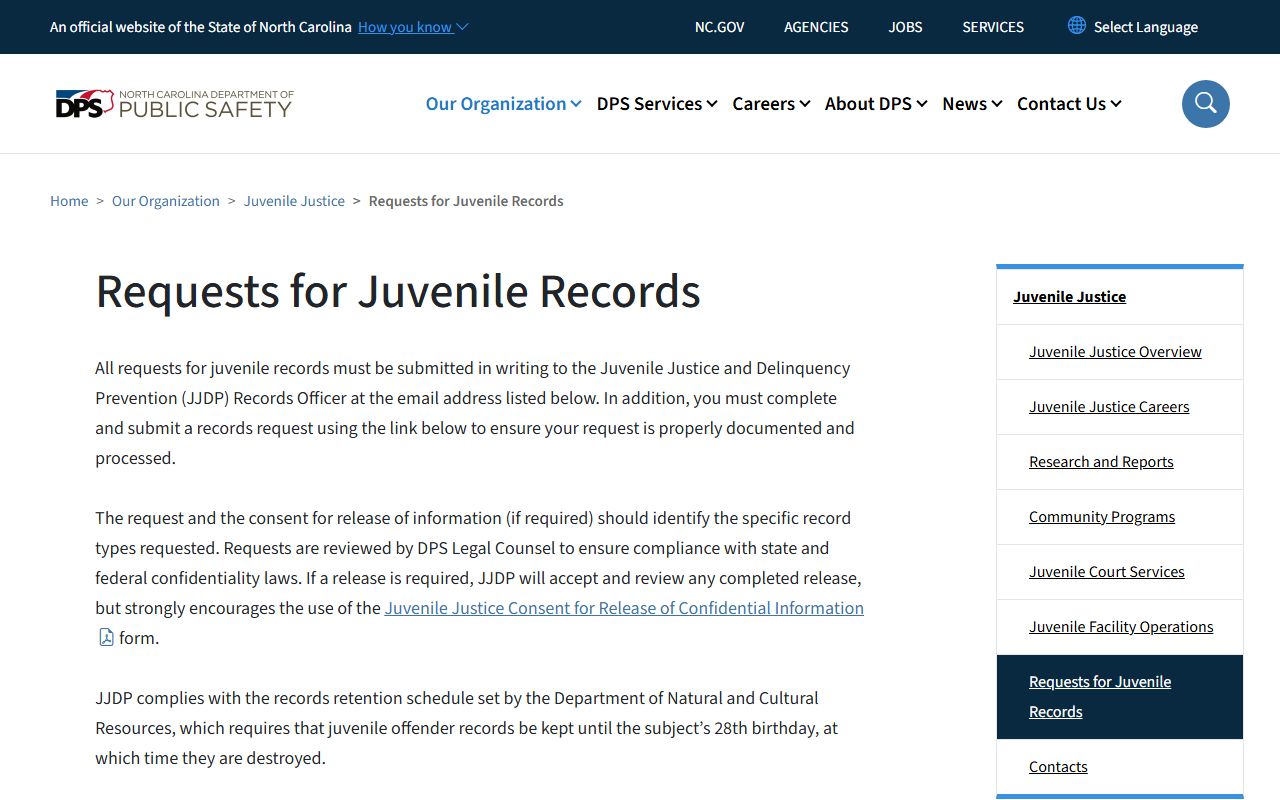
Juvenile material should not be described as a normal Mecklenburg criminal court records search, even when the courthouse handles juvenile matters.
Sealed vs Expunged Records
Sealing and expunction are not the same. A sealed record is hidden from ordinary public view by law or court order but may still exist for limited court, agency, or authorized uses. An expunged record is removed from public criminal history under a court order and processed by the clerk and agencies. Eligibility depends on the charge, outcome, prior record, waiting period, and statutory exclusions.
| Point | Sealed | Expunged |
|---|---|---|
| Public View | Hidden from public lookup or limited by court order. | Removed from public criminal history after order processing. |
| Record Status | The record still exists with restricted access. | The record is treated as cleared for many public purposes. |
| Typical Path | Law, confidentiality rule, or judge's order. | File the correct petition in the county where the case was handled. |
| Mecklenburg Practical Step | Ask the clerk how access is handled for that case type. | Provide the signed order where local inquiry systems require proof for removal. |
Note: A dismissed charge may still appear until the correct expunction or restriction process is completed.
Criminal Records Beyond Court
Some criminal-history questions are not answered by the Mecklenburg court file alone. The North Carolina Department of Adult Correction offender search is for sentenced state-prison, probation, and parole records. The North Carolina SBI sex offender registry is the source for registered offender profiles. Federal criminal cases from Charlotte are not in NC Portal and should be searched through the federal court system and PACER.
The SBI registry is a distinct public-safety database, not the same as a county criminal case docket.
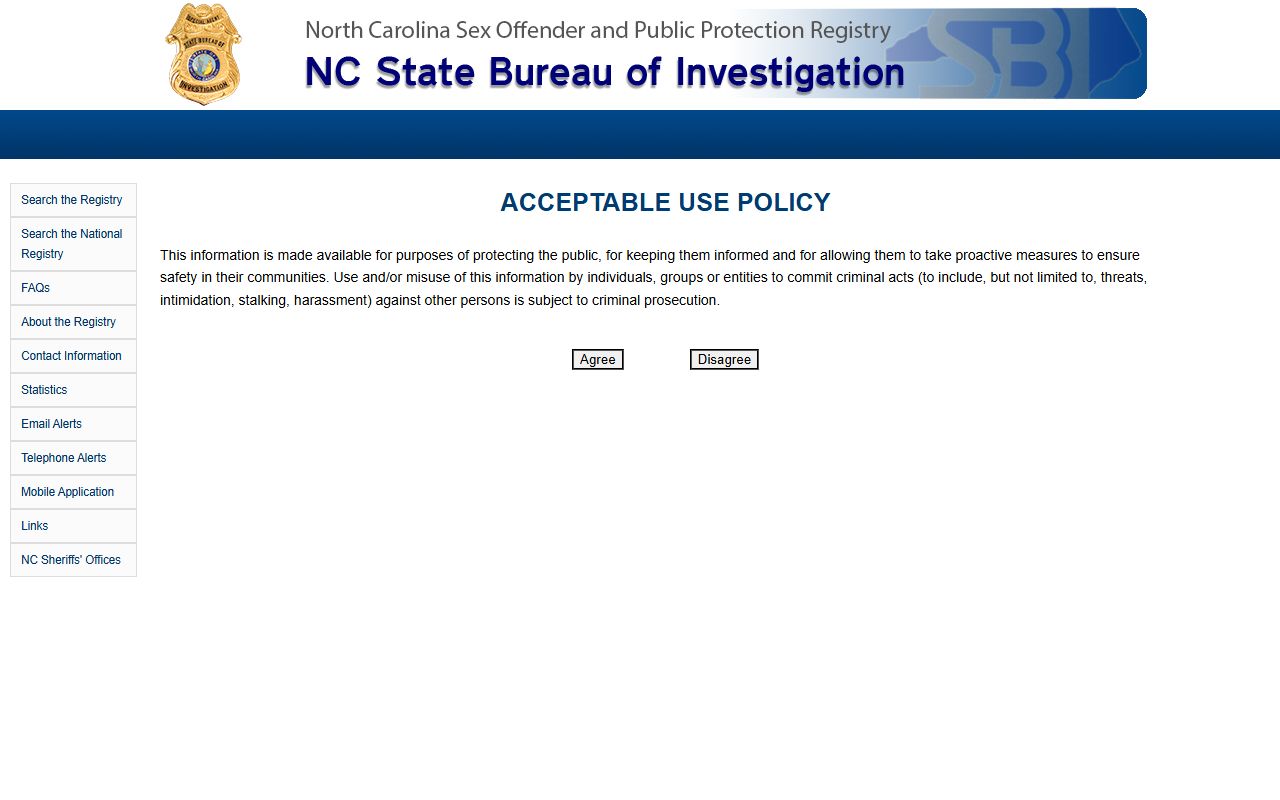
Registry status can appear after a qualifying conviction, but the Mecklenburg court record is still the source for the case's charges, plea, judgment, and sentence.
Mecklenburg Criminal Record Requests
For certified copies, paper files, older criminal documents, or case-specific questions, contact the Mecklenburg Clerk of Superior Court. The public office is at the Mecklenburg County Courthouse, 832 East Fourth Street, Charlotte, NC 28202, and the main clerk phone is 704-686-0400. Public hours are Monday through Friday, 9:00 a.m. to 5:00 p.m. Bring the case number, defendant name, filing date range, and record type when possible.
For older Mecklenburg criminal documents filed before October 9, 2023 that do not appear in Portal, use meckcriminalrecords@nccourts.org and include the type of record request, party names, and file number if known. For all public court records, keep the access channel straight: Portal for search, Search Hearings for dates, public terminals for onsite review, and the clerk for paper files and certified copies.
Mecklenburg Clerk of Superior Court
832 East Fourth Street
Charlotte, NC 28202
704-686-0400
Monday-Friday, 9:00 a.m.-5:00 p.m.