
Mecklenburg County Warrant Search Limits
The most important local fact is the limit itself. The public-facing MCSO Warrant Inquiry URL no longer provides warrant information to the public. The disabled page message says the Mecklenburg County Sheriff's Office no longer provides warrant information to the public, unserved warrants are not considered public records, and the office is unable to release details about them through that public page.
That means Mecklenburg County warrant records should not be presented as an open active-warrant list. The correct public fallback is MCSO Arrest Processing and the Public Information Office. MCSO's arrest-processing information says arrest and warrant inquiries can be submitted to mcsopublicinformation@mecknc.gov and that people may call Arrest Processing at 980-314-5100 to look up and verify warrants.
| Disabled Field or Notice | Type | Current Use | Research Note |
|---|---|---|---|
| Last Name | Text | Disabled/commented | Historically part of the public warrant form, maxlength 30. |
| First Name | Text | Disabled/commented | Historically part of the public warrant form, maxlength 30. |
| Search | Button | Disabled/commented | No current public active-warrant search runs from the page. |
| Reset | Button | Disabled/commented | No current public form reset function is useful. |
| Error notices | Notice | Disabled/commented | Prior messages included search criteria, no results, more than 500 records, and error notices. |
Note: A filed court case may be public while an unserved warrant detail remains unavailable through a public website.
Verify Mecklenburg County Warrants
The official fallback chain starts with MCSO, then moves to court records if the case has reached the eCourts system. MCSO states that it worked with NCAOC on the state's electronic warrant system and adjusted local systems so the public can access charge and arrest information online. The same arrest-processing source says Odyssey/eCourts was implemented in October 2023 and that it will house warrant information.
- Call MCSO Arrest Processing at 980-314-5100 for warrant lookup or verification before relying on any unofficial source.
- Email MCSO Public Information at mcsopublicinformation@mecknc.gov for arrest or warrant inquiries that must be processed when data is available.
- Search the NC Judicial Branch Portal for filed court cases, court dates, charges, hearings, and dispositions tied to the same person or case number.
- For paper-file or pre-October 9, 2023 criminal documents not found in Portal, contact the Mecklenburg Clerk of Superior Court criminal records email listed by the courthouse.
- When the warrant may involve federal prosecution or custody, check federal court and custody sources rather than NC Portal alone.
The MCSO arrest-processing page is the source for the warrant phone number and the Public Information email fallback. It should carry more weight than third-party databases because it is the sheriff's own instruction for Mecklenburg warrant inquiries.
Mecklenburg County Warrant Types
Warrant language can appear in MCSO jail data, court records, and federal records. The MCSO charge glossary helps decode some of the process terms that may be visible after an arrest or booking, even when an unserved warrant is not public. A process code does not always mean the full warrant document is open for public inspection.
- Arrest warrant
- Law-enforcement process authorizing an arrest. The MCSO FAQ uses ARREST as a warrant process type.
- Bench or order for arrest
- Often tied to failure to appear, failure to comply, probation violation, bond terminated, or a court order.
- Search warrant
- Authorizes search or seizure. Public access may depend on service, sealing, and court rules.
- Fugitive or extradition process
- May appear through GOV Order of Extradition or STATE wanted by another state.
- Hold or detainer
- FED, ICE, OOC, STATE, WRIT, and similar terms can show another authority or jurisdiction has a custody interest.
Common court process terms include FTA for failed to appear, FTC for failed to comply, PV for probation violation, BT for bond terminated, and GJI for grand jury indictment. These terms can appear near a Mecklenburg County warrant or custody entry, but they must be read with the case file and current court status.
Mecklenburg County Warrant Record Terms
The disabled public warrant page does not return a current active-warrant result, so a true public warrant-record field inventory is limited. The practical inventory comes from MCSO process terms, court case records, and custody fields that may appear after service or booking. A reader may need more than one system to understand the event.
| Field or Term | What It Shows | Where to Check |
|---|---|---|
| Case | Trial court case number, docket, and number when tied to a filed matter. | Portal, clerk file, MCSO FAQ terms. |
| Description | Text description of the charge or process. | MCSO arrest/inmate data and Portal charges. |
| Process type | Why custody or court process exists, such as ARREST, FTA, FTC, PV, GJI, or GOV. | MCSO FAQ and inmate profile data. |
| Bond | Bond amount or release condition when public and set. | MCSO inquiry, magistrate process, or court file. |
| Bond type | SEC, UNS, CASH, CUST, NONE, or related release category. | MCSO inquiry and court file. |
| Issuing court or authority | The court, magistrate, grand jury, federal agency, or other authority behind the process. | Clerk file, Portal, federal records, or MCSO verification. |
Because unserved warrant details are not public through MCSO's website, a missing result is not proof that no warrant exists. Use the phone and email fallback when the issue is current risk, surrender planning, or verification.
Portal and Court Warrant Clues
Portal is still useful for Mecklenburg County warrant research after a case has become a public court matter. It can show court dates, criminal charges, case events, dispositions, hearings, and financial information when available. A missed court date may lead to an order for arrest, and a probation matter may lead to a violation process.
Portal is not a replacement for MCSO warrant verification. The court system can show filed case context, but the sheriff's disabled warrant page makes clear that unserved warrant details are not released through the public warrant inquiry. If public Portal data and sheriff verification conflict or seem incomplete, the official source should be contacted directly.
Important: Anyone who may have an active warrant should speak with counsel or MCSO before appearing at a courthouse or detention facility.
Federal Warrants in Charlotte
Some Mecklenburg County warrant questions are federal, not state or county matters. Mecklenburg County is in the U.S. District Court for the Western District of North Carolina. The Charlotte Division is at 401 West Trade Street in the Charles R. Jonas Federal Building. Federal criminal prosecutions, federal statutory cases, and related custody matters are not searched through NC Portal.
The U.S. District Court for the Western District of North Carolina handles federal criminal records in Charlotte through the federal court system, not the Mecklenburg trial-court Portal.
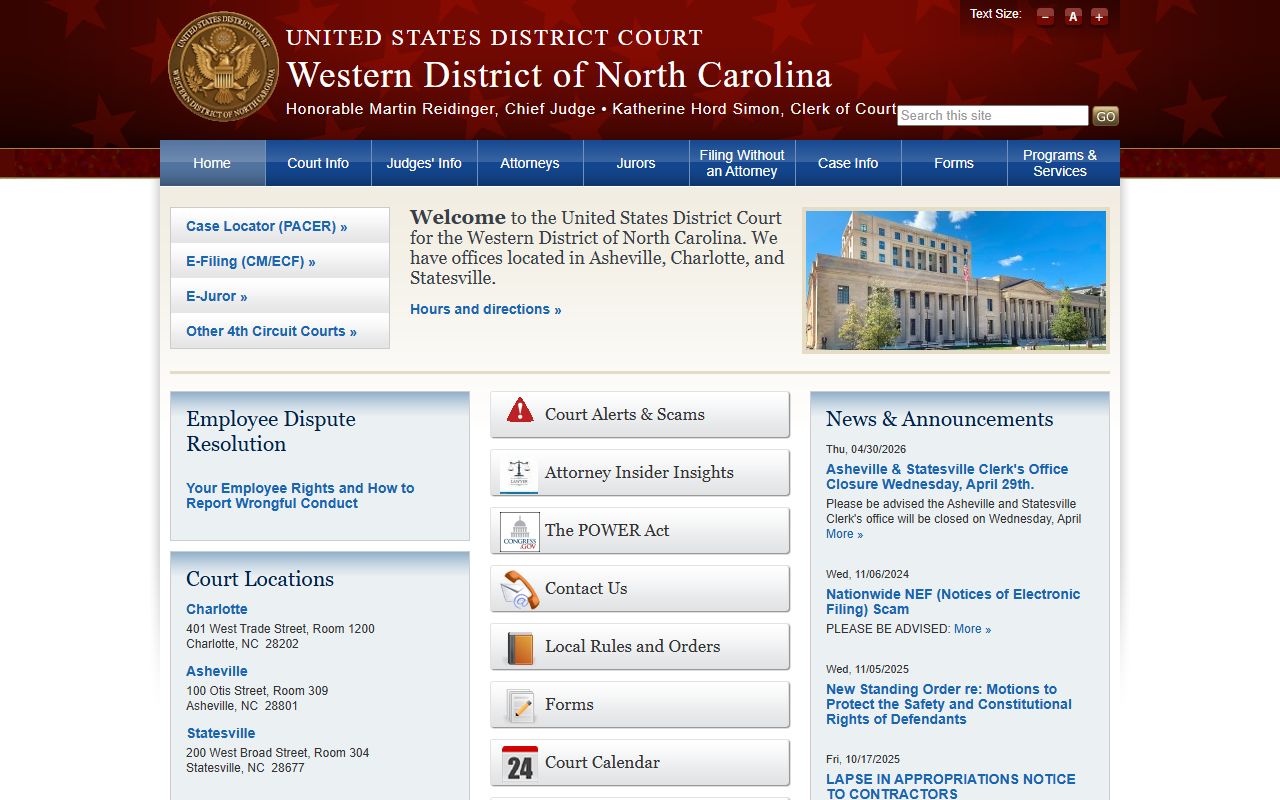
Federal case records are generally handled through the federal clerk, CM/ECF, and PACER rather than county sheriff or state Portal tools.
The PACER case access system is the official electronic access route for federal docket and document research.
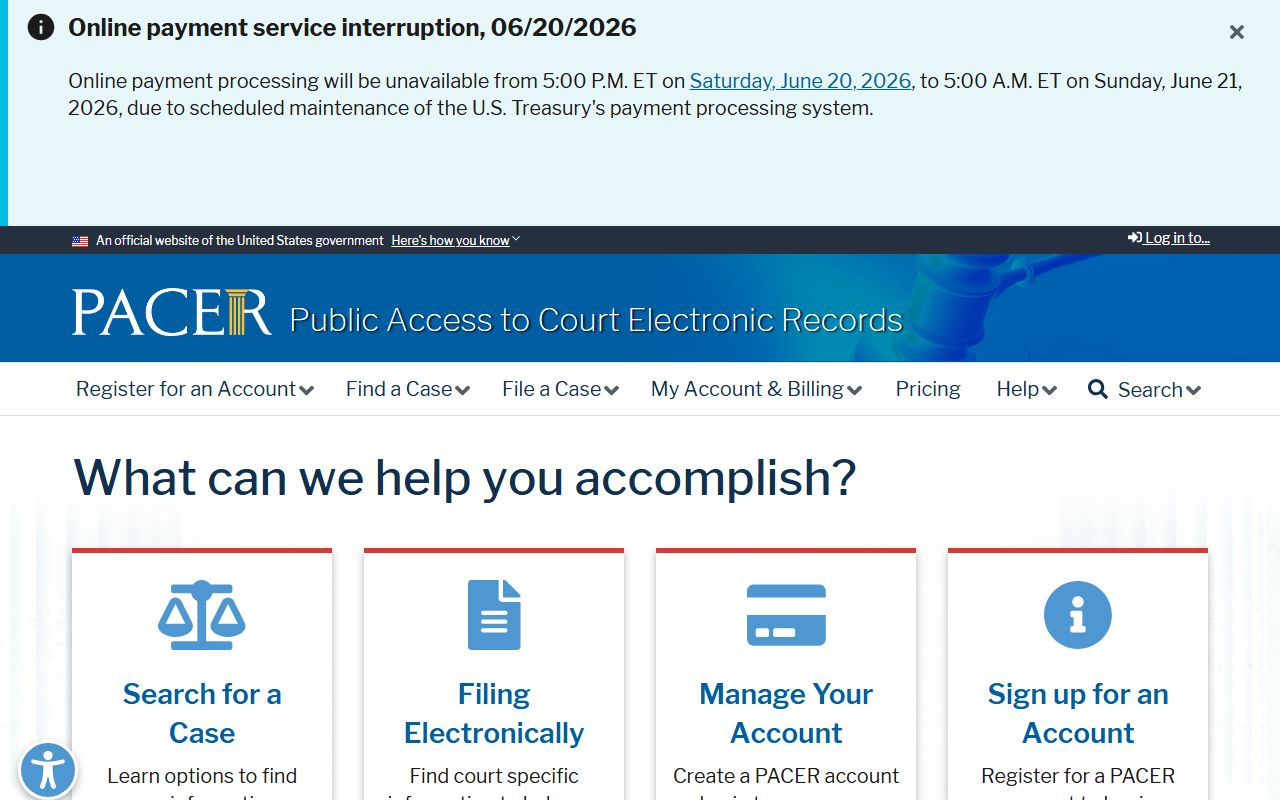
Use PACER for federal case dockets and documents, but use the federal clerk for certified copies and official federal record questions.
Federal Custody and Agencies
Federal custody can still intersect with MCSO. The research notes that U.S. Marshals or federal detainees may appear in MCSO custody as FEDERAL, BOP, or related prisoner types while held locally. That does not make the underlying warrant a Mecklenburg County public warrant record. It means the jail profile may show a federal custody category or hold while the case lives in federal systems.
The U.S. Attorney's Office for the Western District of North Carolina prosecutes federal criminal matters in this district.
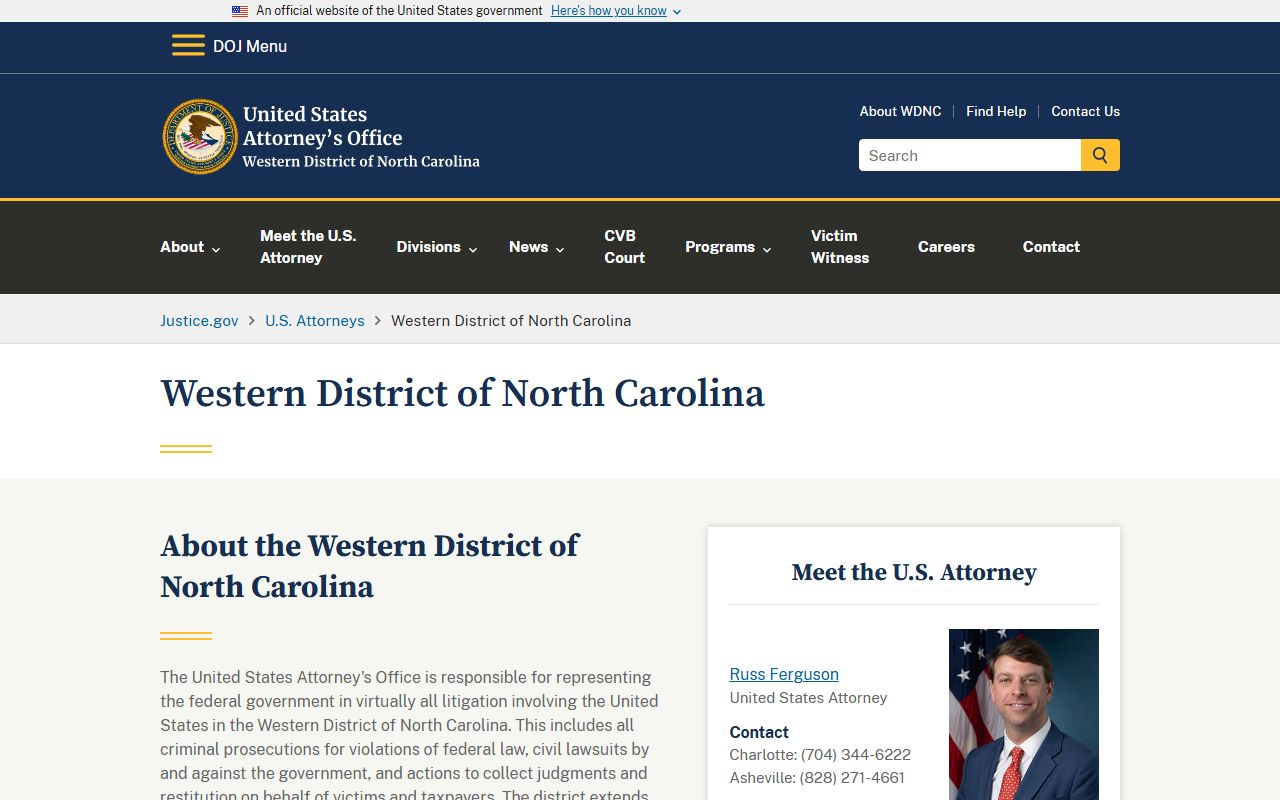
Federal prosecution news or agency pages can provide context, but case-specific warrant and docket records should be verified through court or custody systems.
The U.S. Court of Appeals for the Fourth Circuit hears federal appeals from the Western District of North Carolina.
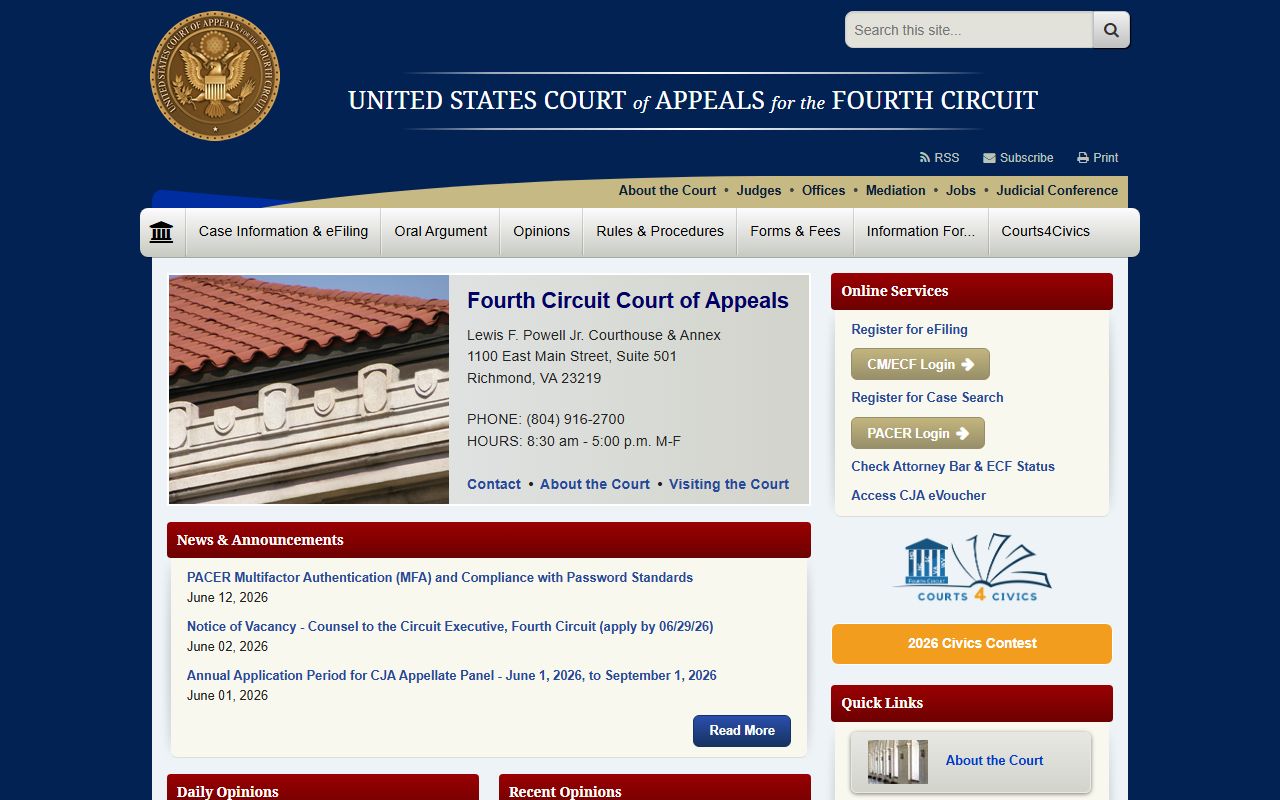
An appeal record is not a local active-warrant search, but it may explain post-judgment federal case activity tied to custody or enforcement.
Warrants and Custody Status
When a warrant has been served and the person is booked, the question often shifts from active warrant status to custody status. MCSO Inmate Inquiry can show prisoner type, PID, JID, charge fields, bond terms, and process terms. For sentenced state prison, probation, or parole, the North Carolina Department of Adult Correction is the statewide source. For federal sentenced inmates, use the federal locator.
The Federal Bureau of Prisons inmate locator covers federal sentenced inmates, not Mecklenburg County jail residents.
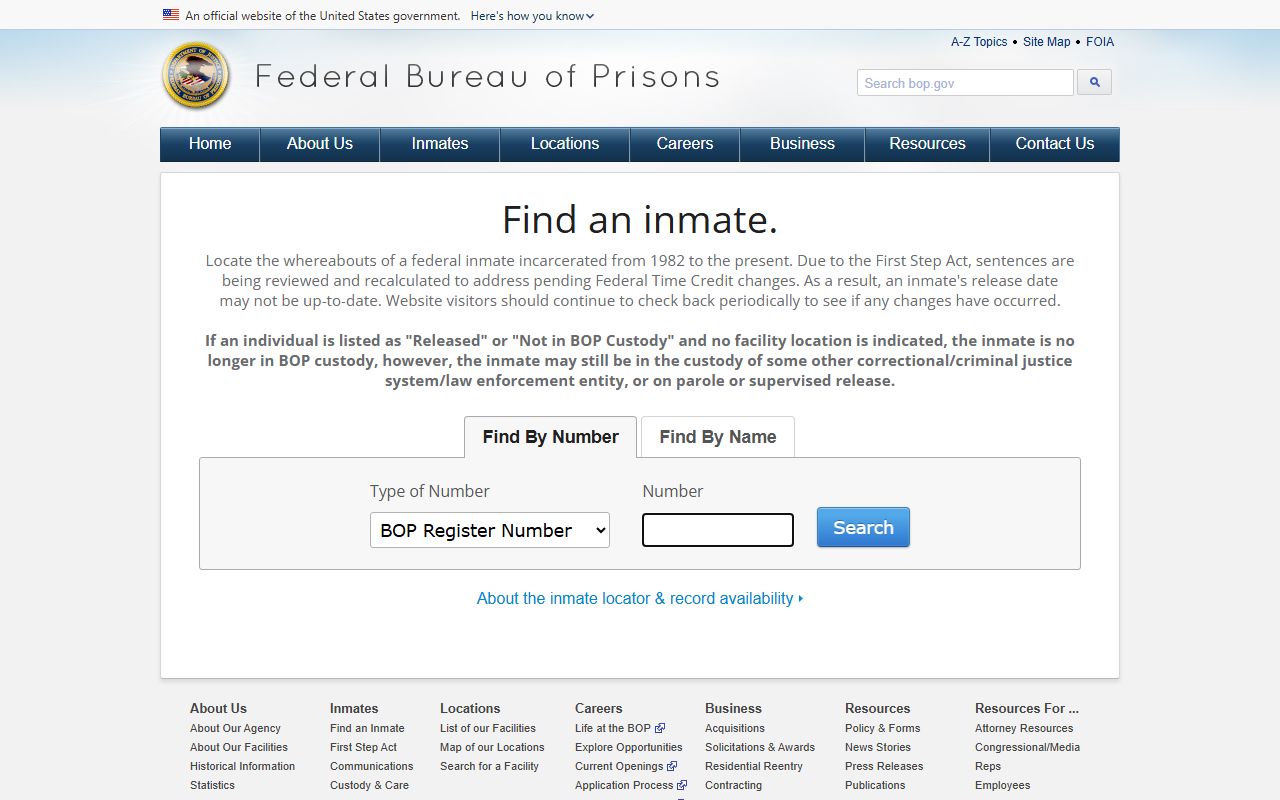
If the person is in local pretrial custody, check MCSO. If the person is in federal sentenced custody, check BOP. If the matter is a state sentenced prison or supervision case, check the state correction source.
Resolve Mecklenburg County Warrants
Resolving an outstanding warrant is not just a website task. Start with official verification. Do not rely on third-party warrant sites. If the warrant is linked to a missed court date, use Portal Search Hearings or the clerk to confirm the court date and case status. If the matter is traffic-related, a failure to appear can also have DMV consequences that need separate confirmation after the court issue is fixed.
- Ask MCSO Arrest Processing whether a warrant can be verified and where to report if surrender is required.
- Ask whether a magistrate appearance, bond condition, or no-bond status applies to the public information available.
- Bring valid identification and avoid prohibited courthouse or detention-campus items.
- After resolution, confirm the Portal disposition, bond status, and any license or probation issue tied to the same case.
- If an expunction order later applies, provide the signed order where MCSO requires it for inquiry removal.
The Mecklenburg courthouse security rules are strict. Knives, tools, pepper spray, firearms, recording equipment, and many sharp or hazardous items are prohibited, and deputies cannot hold prohibited items. Anyone reporting to court or a sheriff facility should plan for screening and leave restricted items elsewhere.