
Mecklenburg County Probate Records
Probate in Mecklenburg County is administered by the Clerk of Superior Court as judge of probate and through the Estates Division. That office handles estates and special proceedings rather than a separate probate court. Common filings include applications or petitions to administer an estate, wills and codicils, oaths and qualifications, letters testamentary, letters of administration, inventories, accountings, creditor notices, year's allowance documents, small estate filings, summary administration documents, and clerk or judge orders.
Some special proceeding files overlap with guardianship, incompetency, and mental-health topics. Those files may have restricted material even when a public index or event entry exists. The useful search path is Portal first, then the clerk counter or public terminal, then the Mecklenburg estates email for older documents that do not appear online.
The manifest image from the North Carolina estates help topic shows the statewide probate starting point used for Mecklenburg County estate matters.
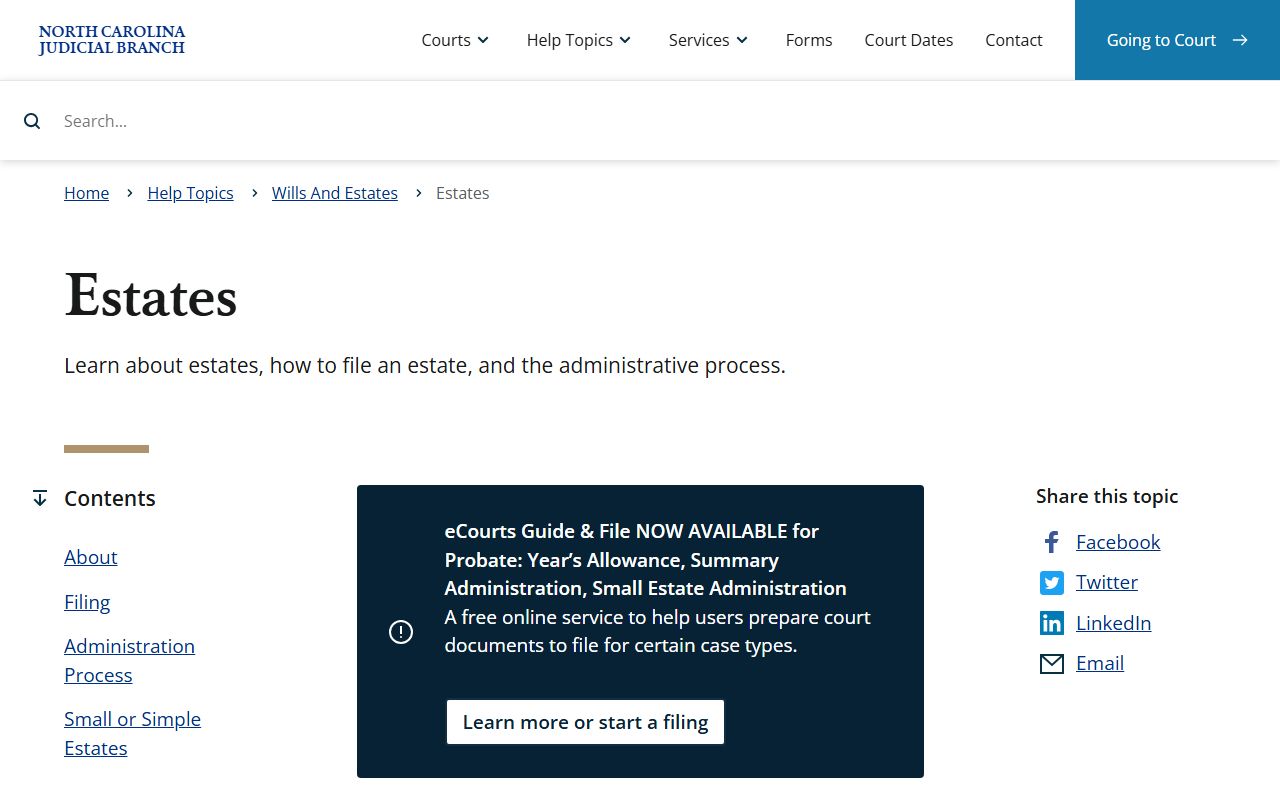
The estates topic is important because Mecklenburg's probate process follows North Carolina statewide forms and court procedures.
Mecklenburg Probate Contact
The Clerk of Superior Court is the local probate office for Mecklenburg County. The courthouse is the public access point for estate files, public terminals, paper records, and certified copy questions. The research also identifies a dedicated estate special proceedings email for older documents filed before Mecklenburg joined Portal that cannot be found online.
Clerk of Superior Court as Judge of Probate / Estates Division
Mecklenburg County Courthouse
832 East Fourth Street
Charlotte, NC 28202
704-686-0400
9:00 a.m.-5:00 p.m. Monday-Friday
Older estate documents: meckestates@nccourts.org
Mecklenburg Probate Terms Defined
Probate terms can be dense because the same clerk office handles estate administration, guardianship, incompetency, and special proceedings. These terms appear often in Mecklenburg County probate records and in statewide estate forms.
- Testator
- A person who made a will.
- Executor
- The person named in a will to carry out estate duties after appointment.
- Administrator
- A person appointed to handle an estate when no executor is named or able to serve.
- Intestate
- Dying without a valid will, which means estate distribution follows state law.
- Guardianship
- A proceeding to appoint someone to act for a minor or an adult who needs legal protection.
- Special proceeding
- A clerk or superior-court proceeding such as estates, partitions, guardianships, foreclosures, or incompetency matters.
Search Mecklenburg County Probate Records
Public estate and special proceeding information may appear in the NC Judicial Branch Portal. Use Smart Search with Mecklenburg County as the location and add case type, case status, file-date range, party name, or record number filters when available. Probate or mental-health hearing data may also be searchable through the Portal hearing search, but detailed mental-health material should be treated as restricted.
For paper files, certified copies, or complete file review, use the Clerk of Superior Court. The courthouse instructions say older Mecklenburg records filed before October 9, 2023 may require email if the document cannot be found in Portal. Estate special proceeding requests should include the type of record request, party names, and file number if known.
- Open the NC Judicial Branch Portal and choose Smart Search.
- Search by estate case number, decedent name, interested-party name, or other known record detail.
- Filter by Mecklenburg County and use case type, status, or file-date filters if available.
- Review the public case summary, events, hearings, orders, or financial information shown.
- Contact the clerk or email meckestates@nccourts.org for older or non-digitized documents.
Mecklenburg Probate Process Steps
The statewide estates page says eCourts Guide & File is available for probate filings including Year's Allowance, Summary Administration, and Small Estate Administration. Mecklenburg filers can use that tool to prepare certain filings, but the filed matter is still handled through the Clerk of Superior Court and the Estates Division.
- Determine whether the matter is a full estate, small estate, year's allowance, summary administration, guardianship, or other special proceeding.
- Prepare forms through Guide & File or the statewide forms process when the matter qualifies.
- File with the Mecklenburg Clerk of Superior Court / Estates Division.
- Pay the required costs or seek a fee waiver if one is legally available.
- Wait for clerk review of qualification, authority, letters, or orders.
- Give notice, inventory property, handle claims, file accountings, and distribute assets under law and court orders.
What Probate Records Show
A Mecklenburg County probate file can show the decedent's name, filing date, case type, status, personal representative, interested parties, wills, codicils, inventories, accountings, letters, creditor claims, notices, hearings, orders, and financial information when applicable. Portal may show only a summary or public events, while the paper file or certified copy request can be needed for full review.
| Probate Field | What It Shows |
|---|---|
| Case number | The court file number used for search, copies, and clerk requests. |
| File date | When the estate or special proceeding opened. |
| Case type and status | Whether the matter is an estate, small estate, guardianship, or related proceeding, and whether it is active or closed. |
| Decedent or party names | The person whose estate is being administered or the parties tied to the special proceeding. |
| Events and hearings | Docket activity, scheduled hearings, orders, and clerk actions where public. |
| Financial information | Costs, accounting entries, or other financial data when shown and not restricted. |
Mecklenburg Probate Cost Sources
Probate costs are governed by current North Carolina court-cost schedules. The research found the official Current Court Costs page and the 2026 estates cost publication source, but it did not parse each estate fee line. Because estate costs can vary by filing type and current publication, the page cites the official cost sources rather than inserting unverified amounts.
| Cost Topic | Official Source | Use |
|---|---|---|
| Current estates court costs | Current Court Costs publication page | Find the current estates cost chart and related statewide PDFs. |
| Court costs help topic | NC court costs help page | Statewide court-cost landing page for civil, criminal, estates, and special proceedings costs. |
| Mecklenburg local payments | Clerk of Superior Court | Confirm payment method, mailing, copy, and file-specific instructions. |
| Register of Deeds fees | Register of Deeds fee schedule | Not used for estate filings because marriage and recorded-document fees do not control probate court costs. |
The manifest image from the NC court costs page shows the statewide fee source for Mecklenburg County probate records.
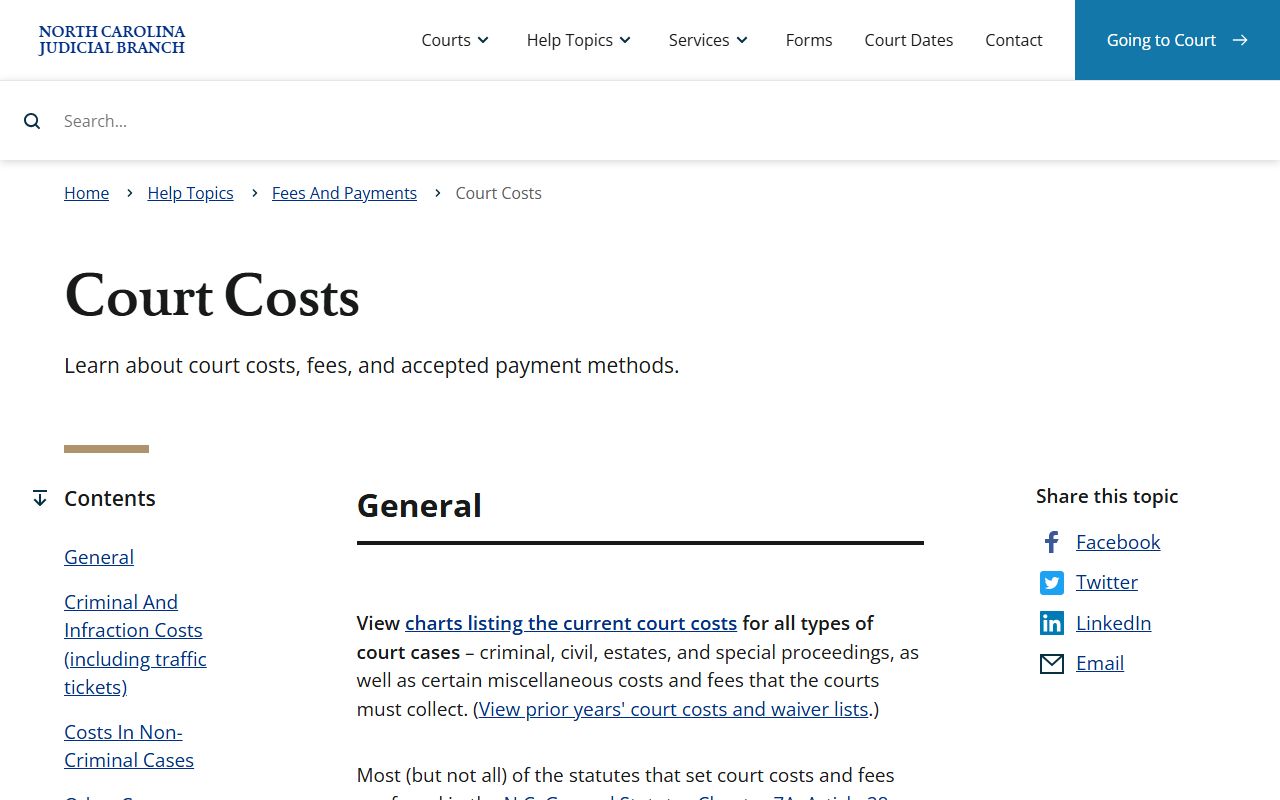
Use the statewide court-cost source for estate filing costs instead of relying on Register of Deeds fees.
The manifest image from the Current Court Costs publication page shows where the current cost publications are posted.
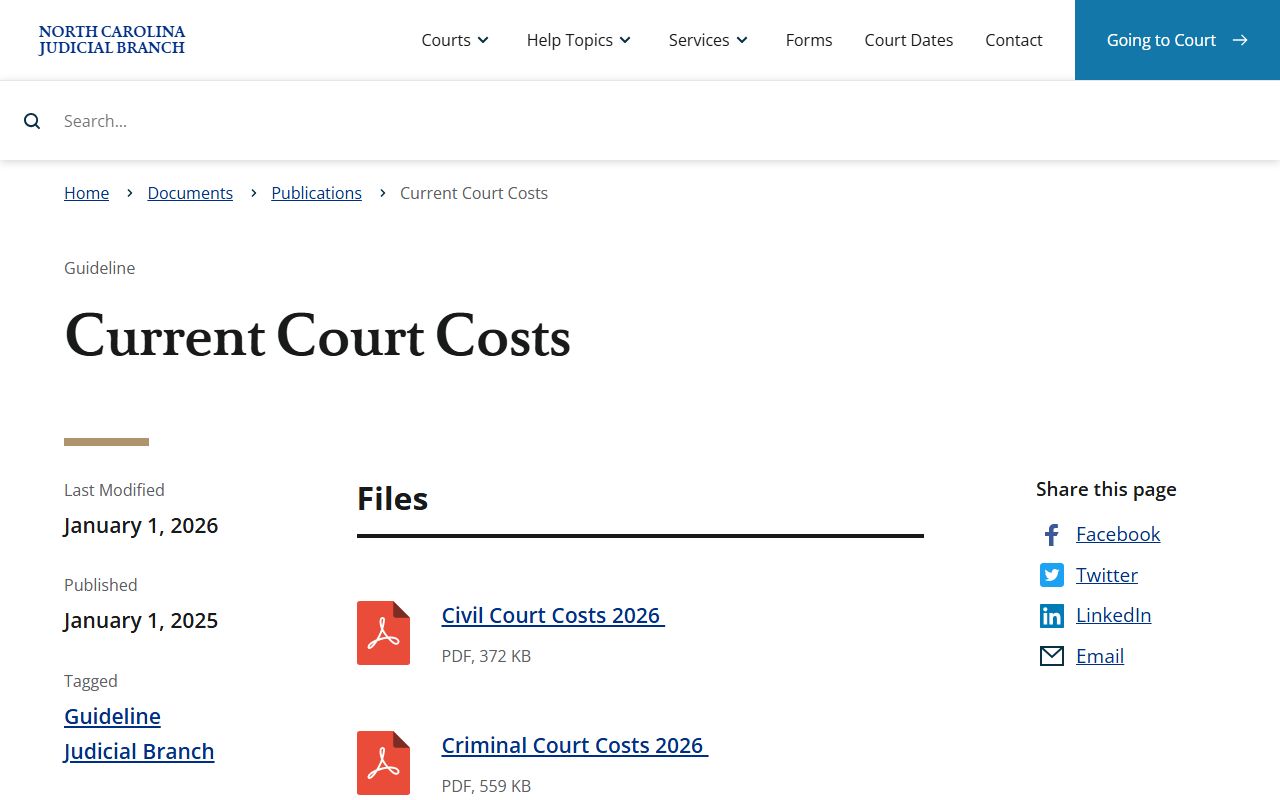
The publication page is the safest source when the exact probate cost depends on the current estates chart.
Restricted Mecklenburg Probate Records
Not every probate-related record is fully public. Mental-health proceedings are generally restricted, and guardianship or incompetency files can contain sensitive medical, financial, or protected-person information. Search Hearings groups probate or mental health as a hearing type, but that does not mean detailed file contents are open public records.
Public records can also redact Social Security numbers, financial account numbers, driver's license or state ID numbers, passport numbers, credit and debit card numbers, PINs, passwords, and protected minor information. A public index may exist even when images, reports, or full case papers are restricted. Marriage, divorce, and estate questions can overlap after a death, but certified marriage copies still come from the Register of Deeds and divorce judgments come from the clerk where the divorce was granted.
For related family records, see Mecklenburg County marriage and divorce records.